

How Listening Effort Affects Communication and Connection
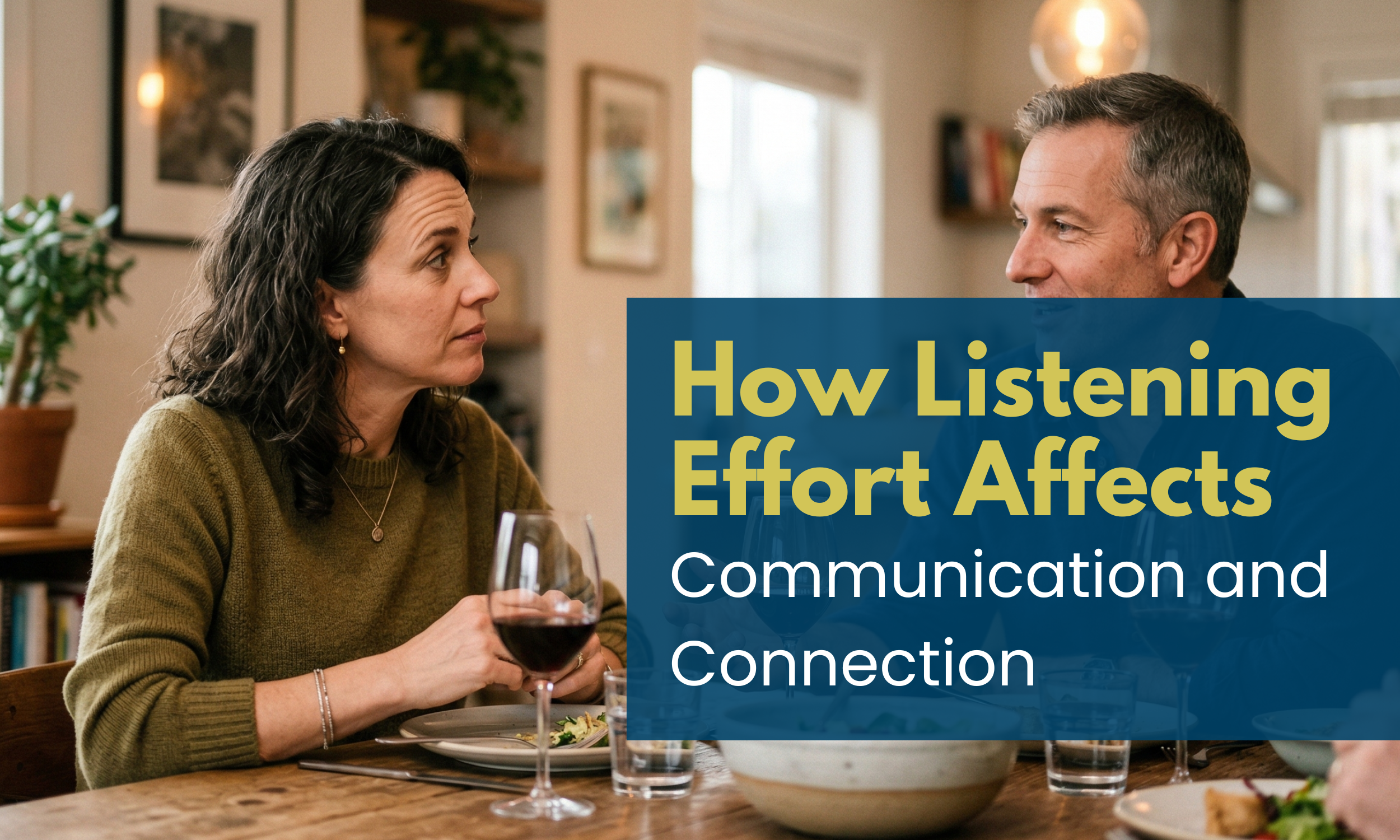
Think about the last time you felt more tired than expected after dinner with people you love. Not because you did not enjoy it, but because following the conversation somehow took more out of you than it should have. Or the moment you realised you had been nodding along, hoping no one would ask you to repeat what was just said.
Those moments are easy to explain away. Background noise. A long week. Getting older. But sometimes, what is actually happening is worth paying a little closer attention to.
What Is Listening Effort, and How Is It Different From Hearing Loss?
Most people think about hearing in terms of volume. You either hear something or you do not. But the reality is more nuanced than that.
Listening effort is the work your brain does to fill in the gaps when sound is not coming through as clearly as it used to. Your ears pick up sound, and your brain interprets it. When the signal is slightly unclear, with certain frequencies dropped, consonants softened, or voices blurred by background noise, your brain compensates. It guesses, predicts, and cross-references. It works harder than it should just to follow a normal conversation.
This is not hearing loss in the way most people imagine it. There is no sudden silence and no dramatic change. What happens instead is a gradual increase in the effort it takes to stay present, along with the fatigue that follows. It is called listening fatigue, and it is one of the most commonly missed signs of hearing strain.
How Listening Effort Shows Up in Real Life and in Relationships
Listening fatigue does not announce itself as a hearing issue. It tends to appear in small, personal ways that are easy to misread.
It looks like someone who used to love dinner parties but finds them draining now. A partner who has grown more withdrawn, giving shorter responses and calling it an early night more often than before. Someone who watches your face more carefully when you speak, or laughs a beat after everyone else in a noisy room.
From the outside, this can look like disinterest, like something has shifted in the relationship. When that misread accumulates over time, with repeated moments of feeling unheard and conversations that feel effortful on both sides, it creates real distance. Distance that has nothing to do with how much either person cares.
The Dinner Table. The Car. The Meeting Room.
Think about the moments where connection happens most naturally, and where the signs often first appear.
Asking "what?" at the dinner table and catching a flicker of frustration from across the room. Losing the thread of a conversation in a noisy open-plan office and covering it just well enough that nobody notices. Turning the television up slightly more than feels normal. Missing the punchline of a story your child is telling you on the drive home.
None of those moments feel like a hearing problem. They feel like a tired Tuesday, a noisy restaurant, or simply getting older. But they are worth sitting with.
Why People Dismiss the Signs
There is a reason hearing effort goes unaddressed for a long time. It does not feel like a crisis. It feels manageable and explainable, nothing that cannot wait.
Hearing is also still widely associated with age, with something that happens to someone else, later in life. Acknowledging it, even privately, can feel like crossing a line that is hard to uncross. So the signs get explained away. The effort increases. The fatigue deepens. And connection, in small and almost invisible ways, starts to feel harder to sustain than it once did.
What is worth knowing is that none of this has to keep accumulating unaddressed. These feelings can be explored, and more often than not, exploring them brings far more clarity than the uncertainty of carrying on as before.
Finding Out Where Your Hearing Is At
A hearing assessment is not a verdict. It is information.
It tells you where your hearing is right now, establishes a baseline, and makes the invisible visible. From there, you can make informed decisions rather than sitting with unresolved questions about why certain conversations feel harder than they used to.
For many people, the result is straightforward reassurance. For others, it is the beginning of getting some real clarity back in their conversations, their relationships, and how present they feel at the end of a long day. Either way, it is worth knowing.
If any of this has felt familiar, in yourself or someone you are close to, come in and find out where your hearing is at. Book a conversation with Kara, Minette or Cait at Hoffman Audiology in Durban (Musgrave Park) or Ballito.
Because the moments that matter most are worth hearing clearly.