Your January Health Reset Should Include Hearing Health and Heart Health, Here’s Why
January has a funny way of making people take stock. Blood pressure gets checked, cholesterol gets a mention, step counts get tracked, and sleep becomes the new hobby. The scales might come out too, even if nobody’s thrilled about it.
One health check often slips through the cracks, though: hearing. It’s easy to assume hearing only matters when it’s “bad” or that it’s simply an ear thing. In real life, hearing supports energy, connection, confidence, and a sense of safety in everyday moments.
That’s why the link between hearing health and heart health is worth talking about.
Hearing is not separate from the rest of your body. It relies on healthy circulation, brain function, energy levels, sleep quality, and lifestyle habits. The same factors that support your heart and overall well-being also support how well your ears and brain work together.
This January, we are taking a whole-body view of hearing health and exploring why cardiovascular health and a healthy lifestyle matter more than most people realise.
Because a true health reset should include how well you hear, process sound, and stay connected to the world around you.
Hearing Is Not Just About Your Ears
Many people think of hearing as an “ear problem”.
In reality, hearing is a complex process involving your ears, your brain, and your cardiovascular system. Sound is detected by tiny hair cells in the cochlea of the inner ear and then processed by the brain. For those structures to work properly, they need a steady blood flow of oxygen-rich blood.
This is where cardiovascular health comes in.
Your heart and blood vessels play a critical role in delivering nutrients and oxygen to every part of your body, including the delicate systems that support hearing and balance. When circulation is affected, hearing can be affected too; circulatory issues can even lead to stroke, impairing the brain's processing of sound.
That connection often goes unnoticed because hearing changes are usually gradual. Circulation problems rarely cause a sudden loss. Instead, many people notice effort, fatigue, or clarity changes long before they notice volume loss.
How Cardiovascular Health Affects Hearing Over Time
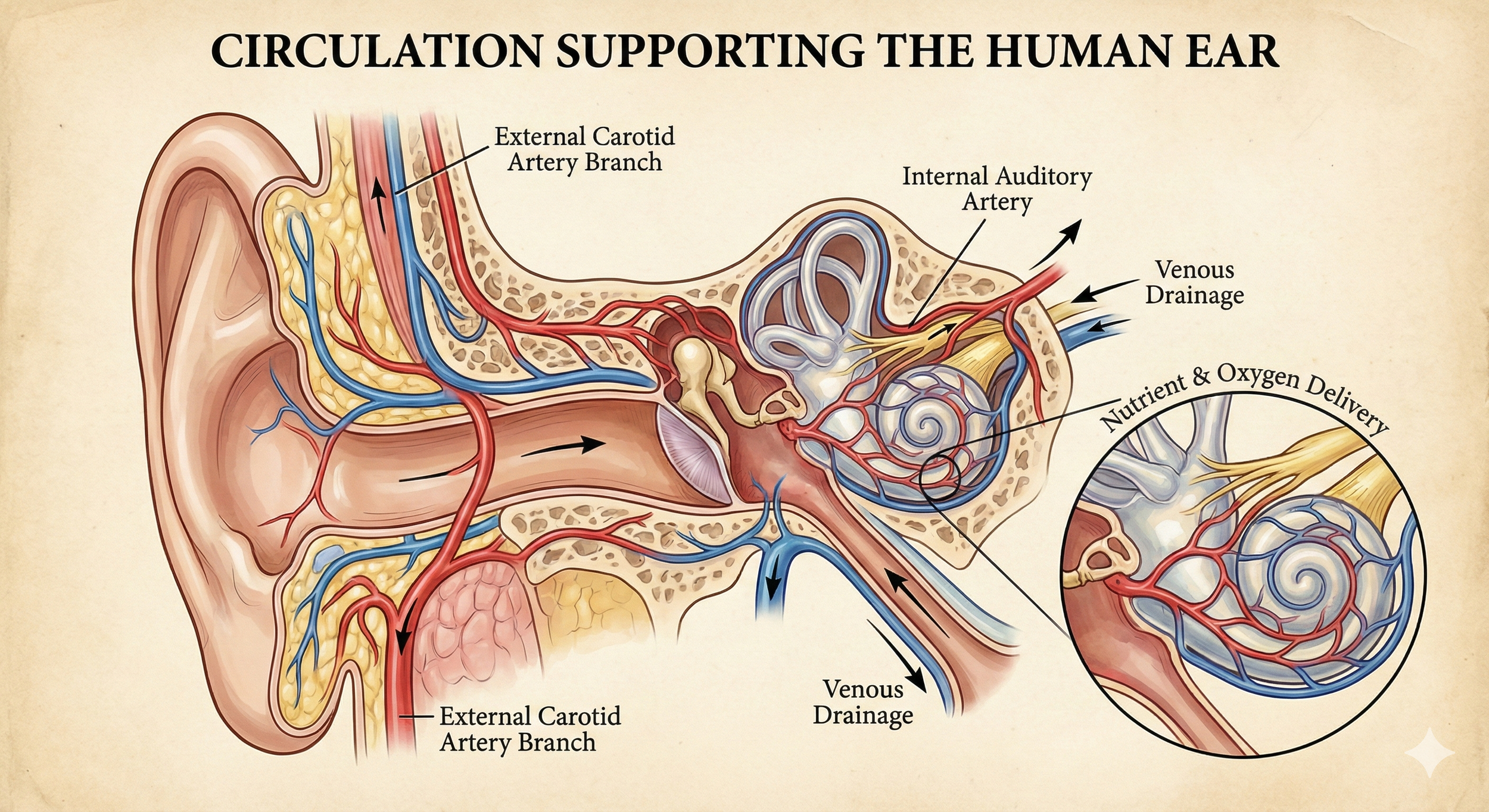
Healthy circulation helps deliver oxygen and nutrients to the inner ear, supporting hearing over time.
Cardiovascular health is not only about preventing cardiovascular disease, heart disease, heart attacks or strokes later in life. It reflects how efficiently your heart and blood vessels support your entire body every day.
Over time, certain cardiovascular factors can influence hearing health.
Blood Pressure and Hearing
High blood pressure, or hypertension, can place strain on the tiny blood vessels that supply the inner ear. These blood vessels are extremely delicate and sensitive to changes in blood flow.
When blood pressure is consistently elevated, circulation to the inner ear can be affected. Hearing changes linked to blood pressure often appear subtly, such as difficulty following conversations in noisy environments or increased listening effort, and may contribute to sensorineural hearing loss.
Cholesterol and Circulation
Cholesterol levels can influence how easily blood flows through your vessels. When circulation is reduced, oxygen delivery to the inner ear may be compromised.
This does not cause immediate hearing loss. Instead, it can contribute to gradual changes over time, especially when combined with other risk factors such as stress, ageing, or noise exposure.
Blood Sugar and Nerve Health
Blood sugar levels, particularly with diabetes, also play a role in nerve health and circulation. Changes in blood sugar can affect the nerves involved in hearing and balance, as well as the blood vessels that support them.
For many people, hearing changes related to blood sugar are slow and easy to overlook, making regular monitoring and preventative checks even more important. Neglecting vascular health can lead to severe complications like heart failure.
Lifestyle Factors That Influence Hearing

Movement and rest both support circulation, energy, and listening stamina.
January often brings renewed focus on habits and lifestyle choices. This is a powerful opportunity to support hearing health as part of a broader wellbeing approach.
Alcohol, Sleep, and Hearing
Alcohol affects sleep quality, circulation, and the nervous system. For some people, it can increase tinnitus or sound sensitivity and reduce how rested they feel the next day. The fluid composition in the inner ear is exceptionally sensitive to alcohol, which changes that fluid.
Good sleep supports brain processing, concentration, and listening stamina. When sleep is disrupted, hearing can feel harder, even if hearing thresholds have not changed.
Small habit adjustments, such as better hydration, improved sleep routines, and reduced alcohol intake, can support both heart health and hearing health.
Stress and Listening Fatigue
Stress places demands on the body and the brain. When stress levels are high, listening often feels more tiring, and anxiety can leave people feeling overwhelmed by noise. Many people describe feeling exhausted after conversations or struggling to keep up in group settings. This psychological distress does not mean something is “wrong”; it is a sign that your system is working harder than it should.
Movement and Exercise
Regular exercise supports circulation, balance, stress management, and brain health through improved blood flow. Physical activity does not need to be extreme to be beneficial.
Consistent, enjoyable movement helps deliver oxygen to the inner ear and supports overall listening stamina. It also contributes to better sleep and improved energy levels, which can make communication feel easier.
Diet and Hydration
Balanced nutrition supports the health of blood vessels, cardiovascular health, brain function, and circulation. Hydration plays a role in maintaining the fluid balance within the inner ear, which is important for both hearing and balance.
Small, sustainable changes often make the biggest difference over time.
Early Signs Your Brain Might Be Working Harder
Hearing changes are often subtle and easy to dismiss. Many people assume they are simply tired, distracted, or overwhelmed.
Some early signs of sensory impairment to pay attention to include:
Struggling to follow conversations in background noise
Feeling exhausted after social situations
Tinnitus, such as ringing or buzzing in the ears
Needing more concentration to listen
Feeling slightly unsteady or off balance at times
These signs do not automatically mean hearing loss, but they do indicate that your hearing system may be under strain.
Listening to these signals early can prevent long-term risks like social isolation and depression, allowing for better support and clearer outcomes.
Why a Baseline Hearing Test Matters
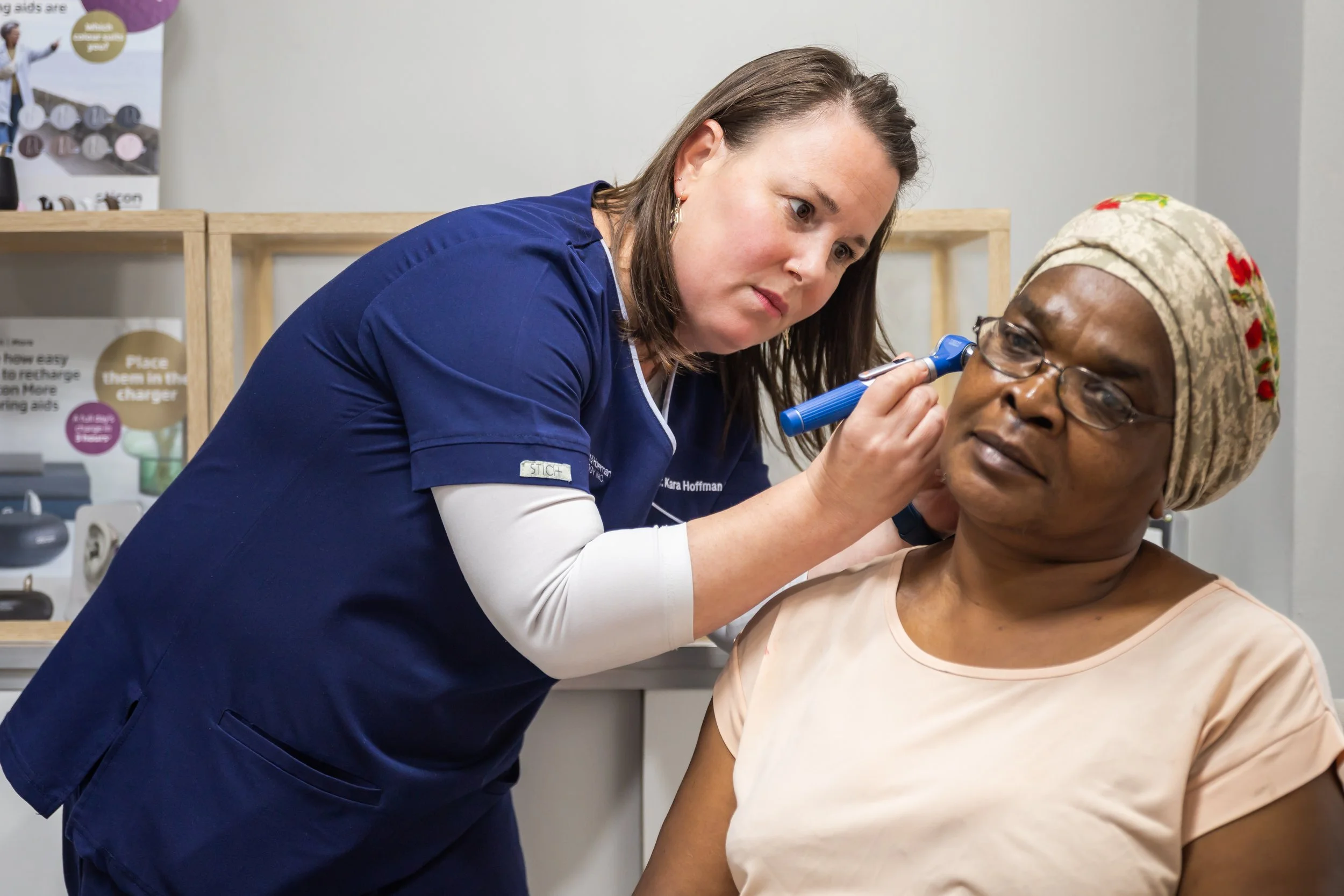
Hearing assessments are about understanding the whole picture, not just test results.
Many adults are diligent about eye tests, dental check-ups, and blood pressure monitoring, yet hearing tests are often postponed or forgotten. This oversight is particularly relevant for those managing complex conditions like heart failure.
A baseline hearing test, performed by an audiologist, provides valuable information, especially from your 40s onwards.
It helps to:
Establish what is normal for you
Track changes over time
Identify subtle shifts early
Support informed decisions about health, lifestyle, and options such as hearing aids
Baseline testing is not about pressure or immediate intervention. It is about clarity and awareness.
If changes occur later, having a reference point makes those changes easier to understand and manage.
Hearing as Part of a More Complete Health Reset
Hearing health is about more than test results.
It affects how connected you feel, how confident you are in conversations, how much energy you have at the end of the day, and how engaged you feel with the world around you. Staying connected through better hearing also supports emotional well-being and can help ward off depression.
Looking after your heart, managing lifestyle habits, and paying attention to early signals all support better hearing outcomes over time.
This January, consider expanding your health reset to include hearing.
Because whole-body health includes how well you listen, connect, and live each day, free from the impacts of hearing loss.
If you have noticed changes or if it has been a while since your last hearing check, a preventative assessment can provide reassurance and clarity, easing any worry.