

Vertigo vs Dizziness: What Is Really Happening When the Room Feels Like It Is Moving
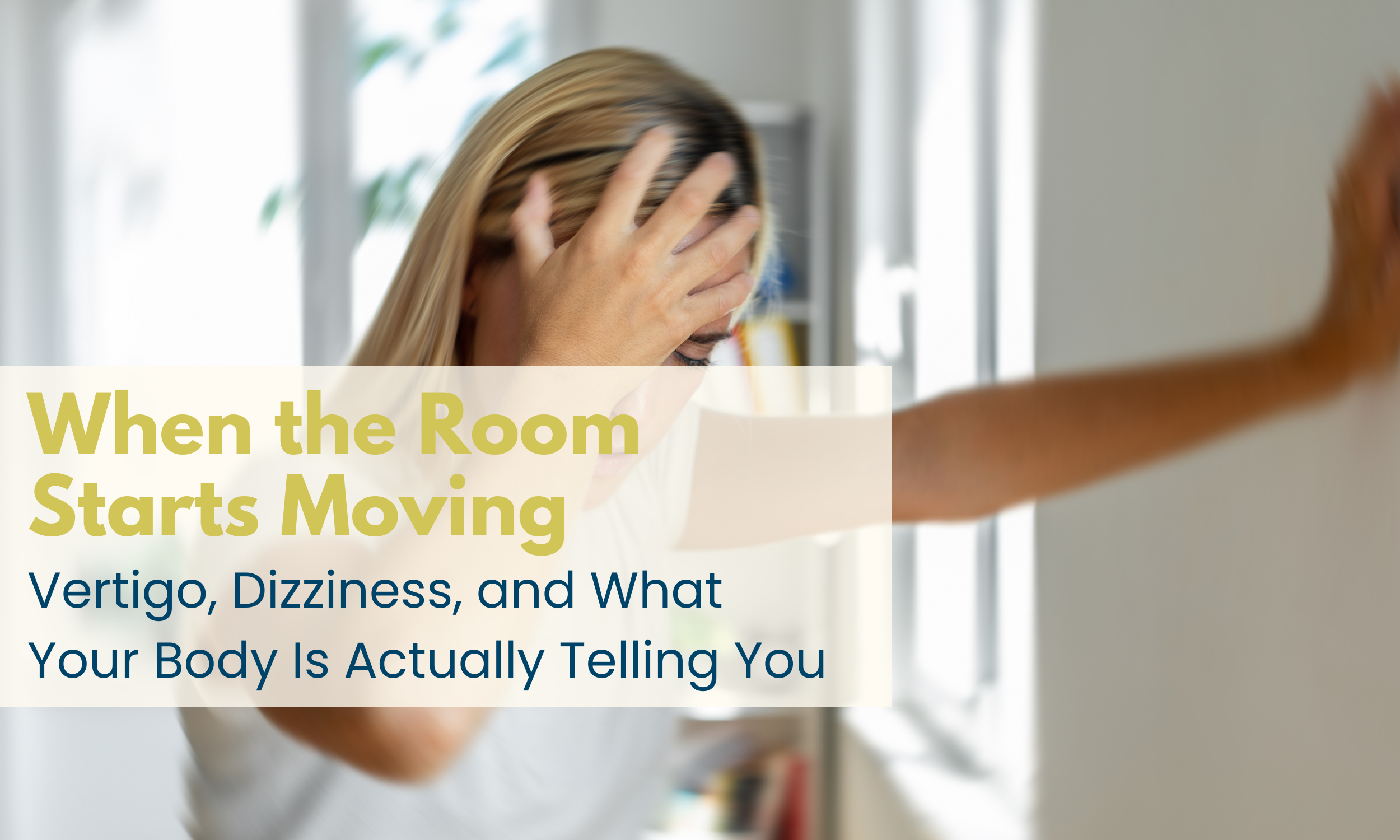
You roll over in bed at two in the morning, and for a few seconds the whole room tips with you. Or you stand up too quickly after sitting for a while, and the world goes soft and grey around the edges. Or you are walking through a supermarket aisle and suddenly feel like you are the one swaying, not the shelves. Three very different sensations, and yet most of us reach for the same word to describe all of them: dizzy. That is where the difference between vertigo and dizziness starts to matter.
Vertigo, Dizziness, and Lightheadedness Are Not the Same Thing
“Dizzy” tends to get used as a catch-all, but it usually means one of a few quite different things. Vertigo is a false sense of movement – a feeling that the room is spinning or tilting even though you are standing perfectly still. It often comes from the inner ear or from the parts of the brain that process balance.
Lightheadedness feels like you might faint. It is often linked to low blood pressure or standing up too quickly. It usually settles once you sit or lie down.
General unsteadiness, sometimes called disequilibrium, feels like you cannot quite trust your footing. This happens even though nothing around you seems to be moving.
These distinctions matter for more than vocabulary. The sensation you describe often points to a different system in the body. Putting it into clear words can help find the right next steps faster.
Common Vertigo Symptoms We Often See
Vertigo itself is not a diagnosis. It is a symptom, and several different things can cause it. Working out which one is happening usually means looking at the timing, triggers, and history. A diagnosis typically comes from an ENT or a neurologist, sometimes a GP, and is based on what we find during an assessment.
When we can match your symptoms to one of these, it becomes much clearer what kind of vertigo you are dealing with and how best to treat it.
Brief Spinning, Triggered By Moving Your Head
These symptoms usually appear as brief spinning spells, often lasting under a minute. They are triggered by rolling over in bed, looking up, or bending down.
It tends to involve tiny crystals shifting out of place inside the inner ear. There are several different forms, each needing its own repositioning technique, so this is not something to try and fix yourself at home. The wrong approach can sometimes make it feel worse rather than better.
*This is a very common type of vertigo we see. It is often linked to a condition called benign paroxysmal positional vertigo (BPPV).
Sudden, Severe Spinning That Does Not Let Up
This type of vertigo can be debilitating, often at its worst for around three days. It is often linked to inflammation in the balance part of the inner ear nerve. This is why hearing is usually not affected. A doctor may prescribe medication to help with the underlying cause of the nausea and discomfort.
Afterwards, a structured vestibular rehabilitation programme often helps address any remaining balance challenges.
*These symptoms are often seen in conditions like vestibular neuritis, where the balance part of the inner ear nerve is affected.
Episodes That Come With Ear Fullness or Ringing
Some people notice a fuller feeling in one or both ears, ringing or buzzing, and hearing that comes and goes. This often happens with more severe vertigo episodes.
This type of vertigo is often linked to changes in inner ear fluid balance, and salt intake can play a role for some people. It often needs a diagnosis and is usually managed with an ENT.
Treatment may include diet changes, medication, and sometimes hearing support. It is not usually fixed with one single treatment.
*These kinds of episodes are often associated with conditions like Ménière’s disease, which affects both balance and hearing over time.
Unsteadiness That Lingers Long After the Original Episode
Sometimes a real vertigo episode happens and settles, but the dizziness does not fully lift afterwards. It can become more of a constant unsteadiness. It is often worse in busy places, like supermarket aisles. It can linger because fear of it returning keeps the nervous system on alert. This can happen even after the original cause has resolved.
What you feel is very real, and it is not simply “just anxiety”. It usually responds well to a combination of counselling and vestibular rehabilitation, sometimes alongside medication prescribed by a doctor.
*When these symptoms stay for months after an initial vertigo episode, they can fit into a pattern known as persistent postural-perceptual dizziness (PPPD).
Why It Is Worth Getting This Looked Into, Not Guessed At
Because so many different things can cause vertigo and dizziness, guessing rarely gets anyone very far. An assessment usually starts with a conversation about timing, triggers, and your history. It is then followed by tests that look at how your eyes move, how your inner ear responds, and how your balance and gait hold up.
From there, we build a plan around what is actually going on for you. If something needs more than we can offer, we make sure you see the right specialist.
A Few Signs That Mean You Should See Someone Quickly
Most dizziness and vertigo, even when uncomfortable, is not usually an emergency.
Occasionally, though, it can be a sign that something needs urgent attention, particularly if these symptoms show up. Symptoms like slurred speech, double vision or other vision changes, a severe headache, sudden hearing loss, or real difficulty standing or walking.
If any of those show up alongside the dizziness or vertigo, it is worth seeking care straight away rather than waiting it out.
If you have noticed any of these types of vertigo over time, or you are recovering from a past episode, it is worth having it looked into.
Dr Kara Hoffman and Cait, our vestibular-trained audiologists, see this kind of thing often across both our Durban and Ballito practices. A clear conversation usually goes a long way toward making sense of what your body has been trying to tell you.
Book a balance assessment in Durban or Ballito so we can work out whether what you are feeling is vertigo, dizziness, or something else, and plan the right next steps together.