Hormones, Hearing and Balance Across a Woman’s Life
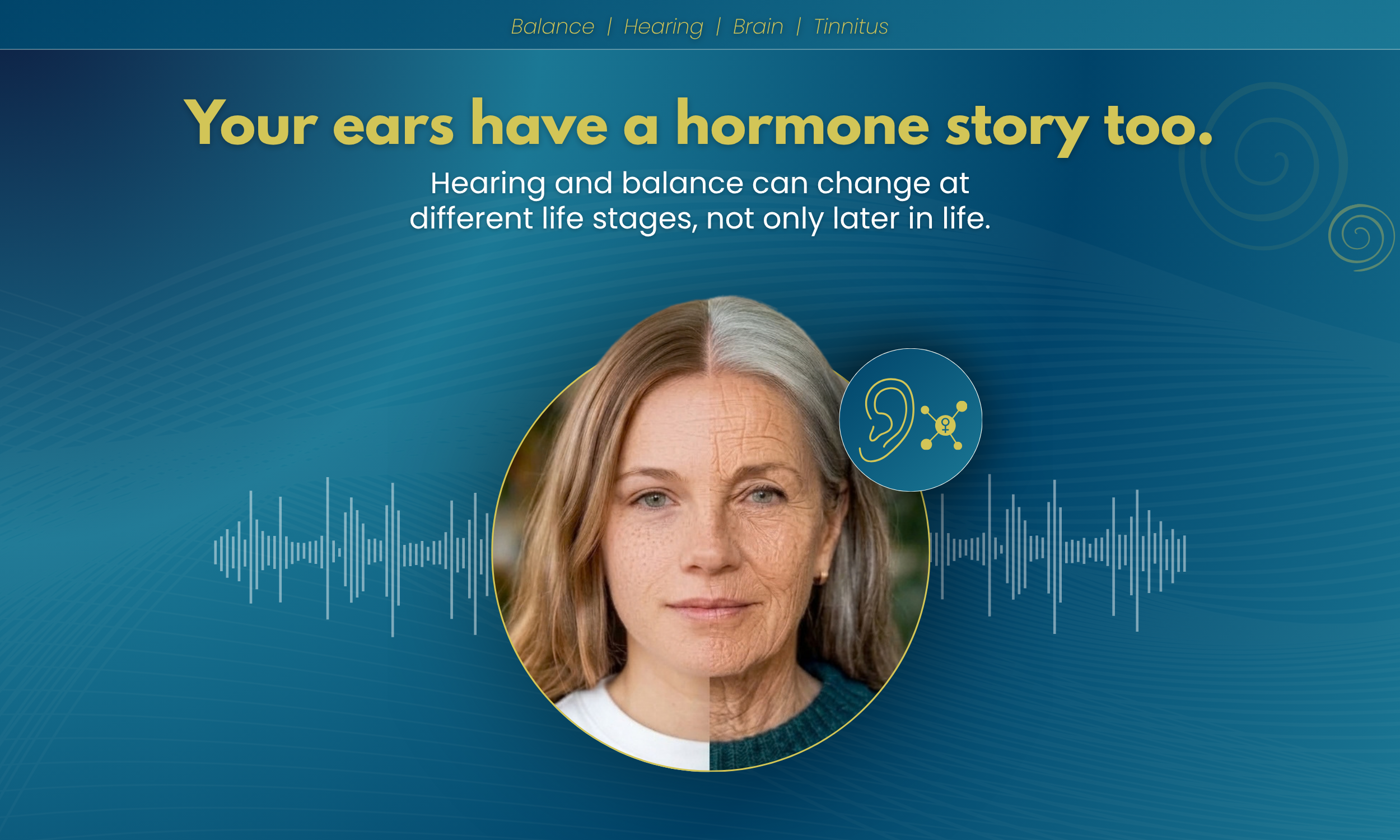
Women get very good at tracking their health.
Blood tests. Mammograms. Thyroid checks. Changes in sleep, energy and cycles. As our bodies move through different stages, we learn to notice when something feels different.
Hearing and balance rarely make that list.
Yet many women start asking questions like: Why is my tinnitus suddenly louder? Why are restaurants more exhausting than they used to be? Why am I getting dizzy spells? Why can I hear someone speaking but struggle to keep up with the conversation?
It is easy to put all of that into the same box: stress, age, tiredness, hormones.
Sometimes hormones may be part of the picture. But they should not automatically be the end of the conversation.
Can Hormones Affect Hearing and Balance?
Yes, hormones can play a role in how we hear and maintain balance. Our ears are connected to wider changes happening in the body during puberty, pregnancy, perimenopause and menopause.
The inner ear relies on a precise balance of fluid, circulation, and nerve signals, so changes elsewhere in the body can sometimes show up in how we hear or feel our balance.
Research suggests that hearing can shift slightly at different points in the menstrual cycle and may change more noticeably around menopause. [1]
That does not mean every new ear symptom is caused by hormones. It means hormones can be one part of the picture, alongside things like noise exposure, family history, migraine, medication and wider health.
The useful thing is to notice when something feels different and know that hearing changes, tinnitus, or balance changes are worth checking rather than simply brushing them off.
Can Puberty or Your Menstrual Cycle Affect Hearing and Balance?
Hormonal changes begin long before menopause.
Research has found small shifts in hearing sensitivity at different points in the menstrual cycle. Most women will never notice those changes day to day, but it reminds us that hearing is influenced by more than age alone. [1]
We also see the wider hormone story in clinic. Dr Kara Hoffman has seen cochlear implant settings need adjustment during puberty and pregnancy. That does not mean hormones are behind every hearing change, but it does show why changes in the body are worth including in the hearing story.
Balance can be part of that story, too. If a teenage girl has recurrent dizziness, we may ask about her menstrual cycle, sleep, hydration, migraine history, and motion sensitivity. We are looking for patterns that can help us understand what may be contributing.
If tinnitus, dizziness, sound sensitivity, or hearing changes keep returning or start interfering with daily life, it is worth getting them checked out.
Pregnancy, Postpartum and Hearing Changes: What About Otosclerosis?
During pregnancy, a lot changes in the body. Fluid balance, circulation, and hormone levels all shift, and some women notice their ears behaving differently during pregnancy or after giving birth.
The good news is that some hearing changes reported during pregnancy can be mild and temporary. When it comes to otosclerosis, though, the connection is less straightforward. Some research has found no strong link, while other studies suggest pregnancy may worsen symptoms in some women. [2][3]
So rather than jumping to conclusions about the cause, we focus on what has actually changed.
Otosclerosis is a middle-ear condition. Kara often explains it as being a little like arthritis in the tiny hearing bones. One of those bones becomes more fixed and cannot move as freely as it should.
People often describe their hearing as softer or blocked. It can feel more like the volume has dropped than the sound becoming unclear. Tinnitus can also be part of the picture, and family history may be an important clue.
If your hearing feels softer, one ear seems different, tinnitus starts or changes, or your ears stay blocked in pregnancy, get it checked. You do not need to know the cause before you come in. We can start with what has changed.
Menopause, Ear Ringing, Brain Fog and Hearing Changes
Perimenopause and menopause already ask a lot of the body. Sleep can change. Concentration can feel different. Migraine patterns may shift. Energy can disappear at exactly the wrong time.
And for some women, hearing, tinnitus, and balance start to feel different too.
Research suggests hearing sensitivity may change around menopause. Recent studies also examine how the menopausal transition may affect balance. [1][4]
So, if you suddenly find restaurants harder to follow, or your tinnitus is more noticeable, take note.
If you have dizzy spells, or conversations leave you more tired than before, take note.
Do not assume you simply have to live with it.
Hormones may be part of the picture. The important thing is to work out what has actually changed.
Why Conversations Can Suddenly Feel Exhausting
This is one of the easiest things to miss.
You may hear someone speaking but miss parts of the conversation. A noisy restaurant takes more effort. A meeting is manageable, but afterwards you feel wiped out. By late afternoon, conversation itself can feel like work.
Dr Kara describes this as the brain trying to fill in the gaps. You do not always notice what you missed, so your brain works harder to keep the conversation together. Think about it for a second. Certain areas of the brain are responsible for processing sound and speech. If those areas are struggling to decipher the words, other parts of the brain can start stepping in to help.
For example, you may find yourself lipreading more. That brings in the occipital lobe, the area of the brain mainly responsible for vision. Its main job is not to understand speech, but now it is helping you follow the conversation.
This extra effort is what we mean by cognitive overload. Your brain is recruiting more areas to do a job that would normally require less effort.
And that is exhausting.
Add poor sleep and everything else happening during perimenopause or menopause, and it can be difficult to tell where the fog or fatigue is coming from.
Research supports the idea that when hearing is reduced, understanding speech can take more mental effort, especially in difficult listening environments. [5]
That does not mean hearing loss causes menopausal brain fog. But the two experiences can overlap, and hearing is something we can measure.
A hearing assessment can show us how you are hearing and how you cope when listening becomes more demanding. Where appropriate, cognitive screening can add another piece to the picture.
Dizzy During Perimenopause or Menopause? Don’t Just Blame Hormones
Dizziness is another symptom women can end up putting up with for far too long.
Hormonal changes can occur alongside dizzy spells. They may become more noticeable. They can also make existing balance sensitivity harder to manage. [4]
But “it’s just menopause” does not tell us what is actually happening.
If dizziness has appeared or become worse, we look at the whole story.
When did it begin?
How long does it last?
Does movement or changing position bring it on?
Do busy shops or visually crowded spaces make it worse?
Is there nausea, tinnitus or a hearing change?
Have migraines or motion sensitivity been part of your history?
You do not need to know what kind of dizziness you have before asking for help.
A detailed case history and balance assessment give us a starting point. From there, we can decide whether to continue investigating within audiology or refer you to another medical specialist.
Why an Annual Hearing Baseline Matters During Hormonal Change
A hearing baseline is your starting point. It shows us what your hearing looks like now.
Think of it like the other health checks you already keep on your radar. Mammograms, blood tests, and other routine checks become more useful when you have previous results to compare.
Hearing is the same.
Once we have a baseline, an annual hearing check helps us compare your results each year and spot changes. These changes can be easy to miss in daily life.
At Hoffman Audiology, we often recommend yearly checks once you have a baseline. This is especially helpful during perimenopause and menopause. It is also useful when symptoms or wider health changes occur.
You don't need to wait for your next annual check if something new, persistent, or worsening appears in the meantime.
How do you know when to come in? If you are over 40 and have one or two ears, it's time to start now!
What Hearing and Balance Changes Should You Get Checked?
Book a hearing or balance assessment if you notice:
Hearing that feels softer or more blocked than before
One ear seeming different from the other
New tinnitus or a noticeable change in tinnitus you already have
More difficulty following conversation in noise
Listening that leaves you unusually tired or mentally foggy
Recurring dizzy spells, room-spinning episodes, veering or feeling off-balance
Symptoms that appear or worsen during a hormonal stage and are affecting daily life
These signs do not tell us the cause. They tell us that something has changed, and that gives us something useful to investigate.
Frequently Asked Questions About Hormones, Hearing and Balance
Can menopause affect hearing?
Research suggests that hearing sensitivity can change around menopause, but hormones are only one part of the picture. Age, noise exposure, family history and wider health still matter. A hearing assessment tells us whether your hearing has actually changed rather than asking you to guess. [1]
Can hormones make tinnitus worse?
Some women notice tinnitus appearing or changing around hormonal stages. Hormones may play a part, but new or changing tinnitus is still worth checking. This helps us see what else may be contributing. [1]
Can perimenopause or menopause make you dizzy?
Hormonal changes may affect your balance system. They may also make an existing sensitivity more noticeable. But dizziness can have many causes. If it keeps returning or is affecting daily life, it deserves a closer look. [4]
The Bigger Women’s Health Message
Women carry a lot through every stage of life, and our bodies keep changing along the way.
Taking your hearing and balance seriously is not about adding another worry to the list. It is about recognising that your ears and balance system are part of the same body you are already trying to care for.
Sometimes the most useful thing we can do is help someone see that an issue matters.
They may have brushed it off or learned to live with it, but it is worth checking.
You do not need to know whether it is hormones, hearing, migraine, stress or something else before asking for help.
Our job is to listen to the story, measure what we can, look for patterns and help you work out the right next step.
If your hearing, tinnitus, listening effort, or balance feels different, come and talk to the Hoffman Audiology team.
Visit us in Durban or Ballito.
Research & Further Reading
1. 2023 review of published research on hormones and hearing function.
https://pmc.ncbi.nlm.nih.gov/articles/PMC10161575/
2. 2021 review of hearing and balance changes reported during pregnancy.
https://pubmed.ncbi.nlm.nih.gov/34182351/
3. 2022 review of pregnancy and otosclerosis.
https://pubmed.ncbi.nlm.nih.gov/34819176/
4. 2026 review of the menopause transition and dizziness.
https://pmc.ncbi.nlm.nih.gov/articles/PMC12907068/
5. Review of hearing loss and listening effort.