

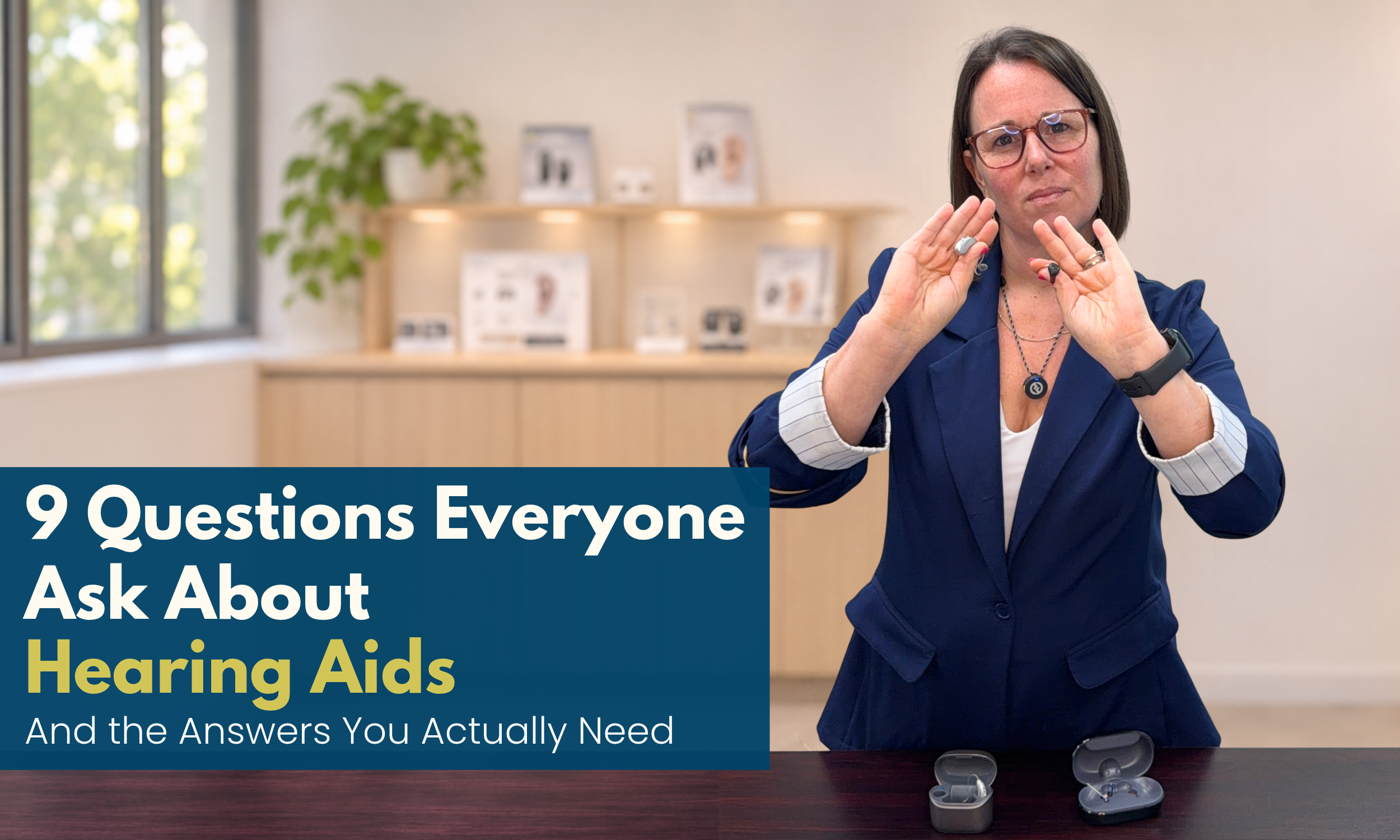
Most of the questions we hear about hearing aids don't start in our consulting rooms. They start at home, usually after a family lunch where Dad missed half the conversation, or the third time someone has asked him to turn the TV down. By the time people call us, they've often spent weeks going back and forth with each other and with Google.
So we've gathered the questions we're asked most in our Durban and Ballito practices and answered them the way we would if you were sitting across the desk from us.
Before you book
1. How do I know if I need hearing aids?
Hearing usually changes slowly, so most people adapt without realising it, which is why family members often notice first. When our patients describe what's been happening, we tend to hear the same things:
"Everyone mumbles these days"
"People don't speak clearly anymore and it sounds like they swallow their words"
"I can hear you, I just can't make out what you're saying"
Finding some TV presenters harder to follow than others, because their words seem to run together
Laughing when everyone else laughs, without quite catching the joke
Coming home from a busy family lunch more tired than you should be
None of these means you need hearing aids, but they're a good reason to find out where your hearing is at. A hearing assessment doesn't commit you to anything, and sometimes the right next step is simply to keep an eye on things and check again next year.
2. Can I buy hearing aids over the counter or online?
You can, and they're easy to find. Just know what you're buying. Most over-the-counter devices are amplifiers. They turn sound up, but they aren't set to your hearing, and nobody checks what they're doing in your ears.
That matters because louder isn't the same as clearer. Hearing loss usually affects some pitches more than others, often the higher ones that make speech crisp. Turn everything up and the kettle gets louder, but voices can stay just as fuzzy.
Hearing aids from an audiologist are prescription medical devices. They are programmed for your hearing loss, and they add support where you need it.
Online hearing tests have a similar gap. Most check a few pitches in a quiet room. They can't tell you how well you follow speech in noise, or why your hearing has changed. Results can also shift depending on where you take the test, your earphones and even your internet connection.
That’s why an audiologist tests your hearing in a sound-treated booth. This keeps outside noise from affecting the accuracy of your results. Sometimes the cause needs medical attention, not a device. A diagnostic hearing assessment helps us find that out. It's worth having the full picture before you spend money on either.
What to expect from hearing aids
3. Will hearing aids help me hear better?
Yes. For many people with hearing loss, hearing aids make everyday conversations easier, from the dinner table to phone calls.
How much they help depends on three things:
How well they're matched to your hearing
How carefully they're fine-tuned after the first fitting
How consistently you wear them while your brain adjusts
That adjustment surprises people. Hearing aids work with the hearing you have now, and if your hearing changed slowly, your brain has got used to hearing less. Everyday sounds can seem loud and sharp at first. A flushing toilet might sound like a waterfall, and you may notice your car's indicator ticking for the first time in years. This usually settles as your brain catches up, often over the first three to six months.
We check your progress in two ways:
We measure what the hearing aids are doing inside your ears, because no two ears are exactly alike
We revisit the everyday goals we set together at the start, like following dinner table conversations or managing phone calls without strain
Before the first follow-up, write down one moment that felt easier and one that still bothered you. Or ask the family what they noticed. “Dad listened to the whole talk at Sunday lunch. But the plates and cutlery still sounded sharp.” These details help us fine-tune.
When hearing aids end up in a drawer, it is often because no one tuned them after day one. Many people also don't realise the first few weeks can feel strange.
4. Do hearing aids help in background noise?
Yes, and how much they help depends on a few things. Because we test how well you follow speech in noise before you get hearing aids, we can give you realistic expectations from the start. After that, it comes down to the technology you choose, how many hours a day you wear them, and where you spend your time.
Dr Kara aims to make noisy places one step easier. If a restaurant is a real struggle now, the goal is to make it a smaller one.
Hearing aids aren't designed to remove all background noise, and that's deliberate. Hearing what's going on around you keeps you safe. Hearing aids give your brain access to sound.
We then help your brain focus on speech and filter out noise through aural rehabilitation and auditory training. This skill builds over time.
The longer hearing loss goes untreated, and the harder noise is for you, the more there is to rebuild. That's why we see hearing care as preventative care.
If noise is still hard, a small clip-on or table microphone can send voices straight to your hearing aids. And tell us which noisy place matters most to you, so we can fine-tune for it.
Costs, medical aid and choosing the right pair
5. How much do hearing aids cost, and why do prices vary so much?
As a guide, our hearing aids range from around R8,000 to R65,000 per ear, and your assessment will show whether you need one or two. The range is wide because no two people need the same thing from their hearing aids. When we recommend hearing aids, we look at:
Your hearing results, including how well you follow speech in noise
How you spend your days, from quiet evenings at home to meetings, braais and phone calls
How easily you can handle small devices and controls
The features that would make a difference to you, like rechargeable batteries, streaming calls and TV straight to your hearing aids. Another feature may be more advanced noise processing
Your budget
Dr Kara compares it to buying a car. Every car gets you from A to B, but the extras only make sense if they suit the way you drive. Someone who loses the thread whenever there's background noise may need advanced noise processing. Someone who spends most days somewhere quiet may not.
Your price also covers more than the device. Each hearing aid comes with a treatment plan. It includes your fitting, follow-up adjustments, cleanings and checks, and ear training and rehab support. This helps you settle in. That support is there for first-time wearers and for long-time wearers who need a hand. We'll explain what your plan includes before you decide.
For the full breakdown, read our guide to hearing aid costs in South Africa.
6. Will my medical aid pay for hearing aids?
Many South African medical aids offer a hearing aid benefit. How much they pay, and how often, depends on your scheme and plan. Some plans pay out every year. Others pay out every three to five years. So, two people on the same medical aid can have different benefits.
We take the admin off your hands. Our team phones your medical aid to check your benefit, prepares the quote and motivation letter, and submits everything directly to your scheme.
Before we order anything, we'll take you through what your medical aid will pay and what the balance is. If you'd like to spread that balance out, we've partnered with payment providers who can help.
7. Can I try hearing aids before I buy?
Yes, we offer demonstration hearing aids, mainly for first-time wearers, and also for long-time wearers looking at newer technology. Your brain needs a couple of weeks to settle into new sound before you can judge what's working, and a short trial gives it that time. It can also help if a past pair let you down and you'd like to see the difference before you commit.
Because we're independent and not tied to one manufacturer, we choose demonstration devices to suit your hearing, lifestyle and budget. After about two weeks, we test how well you follow speech in noise and decide together. If you already wear hearing aids, we can sometimes compare current technology with yours in one appointment instead. We'll explain any conditions before you start.
8. Do I need two hearing aids?
If you have hearing loss in both ears, yes. Your brain relies on input from both sides to work out where sounds are coming from and to pick out one voice from the noise around it.
Following a conversation in a noisy place with only one ear aided goes against how your hearing system is built to work. If both ears need help and only one is fitted, your brain gets an unbalanced signal. It then struggles to filter out noise. This often leads to frustration at restaurants and family gatherings.
There's also a long-term reason to treat both. When hearing loss in one ear goes untreated, the brain gets less practice processing speech from that side. Over time, its ability to understand words clearly can weaken.
If your hearing loss is only in one ear, a single hearing aid is usually all you need. Your hearing assessment will show us the setup that gives you the best results.
Living with hearing aids
9. How long do hearing aids last?
Many people use their hearing aids for three to five years. This depends on the model, care, battery health, and changes in your hearing.
Rechargeable batteries usually last three to five years. Because the battery is in the same module as the microphone and chip, you can't replace it separately. A worn battery often means you need to replace the whole unit. The follow-up care in your treatment plan usually ends when the warranty ends. This is often one to three years in, depending on your device.
Age isn't the only thing to watch, though. Your hearing can change while your hearing aids keep switching on every morning, and your brain gets used to whatever sound it's given. As Dr Kara puts it, "You don't know what you don't know, and you can't hear what you can't hear." That's why regular reviews matter. A review doesn't automatically mean new hearing aids, and sometimes a service or a re-tune is all you need.
A few quick ones
Can someone come to my appointment with me? Please bring them. It helps when the people you talk to most understand what we find, and they often notice things you don't. Just mention it when you book.
What if I already have hearing aids I hardly wear? Bring them in and tell us what made you stop. We'll check whether they need attention or a re-tune before anyone talks about anything new.
Do I need to know which hearing aids I want before I come in? Not at all. You don't need to know a brand, a model or even whether you need hearing aids. That's what the assessment is for.
Start with the conversation you want back
For the questions we didn't get to here, Dr Kara's book has you covered. Download Behind the Ear for free. It walks you through hearing loss, your options and the decisions that come with them.
When you're ready to find out where your hearing is at, book a conversation with our team in Durban (Musgrave) or Ballito. Bring your questions, and bring the family.